Table of Contents
The Plastic Truth Nobody Talks About
Zero waste beauty changed everything for me—and it started with a simple realization: the plastic bottle of body wash I bought last Tuesday is going to outlive me by about 400 years. Wild, right? If you’ve ever stood in your shower, looked around at all those bottles, and felt that little pang of guilt—welcome to the club. We’ve all been there.
Here’s what really got me: the beauty industry produces more than 120 billion units of packaging every year, and 95% of it gets thrown out after one use. That’s not a typo. Billion. With a B. And here’s the kicker—only 9% of plastic actually gets recycled, according to the EPA. The rest? Landfills, oceans, and eventually, microplastics in our food chain.
But here’s what nobody tells you about switching to solid soap: it’s not some crunchy sacrifice where you have to give up luxury or effectiveness. It’s actually one of those rare choices where doing the right thing also feels ridiculously good. The sustainable beauty movement is proving that eco-conscious doesn’t mean compromising on quality.
A comprehensive study from ETH Zurich’s Institute of Environmental Engineering found that liquid soap has a 25% larger carbon footprint per wash than bar soap. And get this—it requires five times more energy to produce and nearly 20 times more energy to package. My skin is happier, my bathroom looks like an actual spa, and I’m not spending Sunday nights worrying about which recycling bin my empties go in.
Sometimes the old way really is the better way—just with better science and zero guilt.
The Science Behind Solid Soap Superiority
Remember when your grandmother swore by bar soap and you thought she was just being old-fashioned? Turns out, she was onto something—but the science behind it is even cooler than you’d think.
The Concentration Advantage
Solid soap contains zero water content. None. Every single gram is active ingredients doing their job. Liquid soaps? They’re typically 70-80% water. You’re essentially buying diluted product in an oversized plastic bottle, then paying to ship that extra water weight across the country. It’s like buying a designer handbag that’s mostly stuffing.
In a regular 30-second hand wash, people use on average 0.35g of bar soap compared to 2.3g of liquid soap. That’s more than six times the product for the same result. One quality bar soap lasts as long as 2-3 bottles of liquid wash, which means fewer shopping trips, less storage space, and way better value for your money.
Transportation Efficiency
Because solid soap is compact and lightweight, it’s dramatically more efficient to transport. Bar soaps stack perfectly, liquid bottles don’t. This translates to fewer shipping trucks on the road, lower fuel consumption, and reduced carbon emissions from logistics alone. It’s the kind of efficiency win that makes both your wallet and the planet happy.
Why Dermatologists Are Finally Catching On
For years, there was this myth floating around that bar soap was somehow bad for your skin. Drying. Harsh. Old-school. Turns out, that was mostly clever marketing from liquid soap companies—and dermatologists are now speaking up about it.
Dr. Brendan Camp, a board-certified dermatologist at MDCS Dermatology in New York, points out that bar soaps are actually more effective at removing oil, dirt, and residue from skin than liquid soaps. His reasoning? “Liquid soaps are water-based, which means they are more diluted than bar soaps.” Less dilution = better cleansing power.
Even more interesting: that water-based formula also makes liquid soaps “more prone to contamination with bacteria,” according to Dr. Camp. So that myth about bar soap being unsanitary? The science suggests the opposite might be true.
The Skin Barrier Connection
Dr. Deanne Mraz, a board-certified dermatologist and president of Modern Dermatology in Connecticut, emphasizes that quality bar soaps are often gentler on skin because they skip the artificial preservatives that liquid soaps need to extend shelf life. “Bar soaps are waterless and don’t need synthetic chemicals to keep them fresh,” she explains.
For people with sensitive skin, eczema, or conditions like rosacea, fewer ingredients often means fewer irritants. Many dermatologist-recommended bar soaps contain just 4-5 natural components—compare that to the 15-20 synthetic ingredients in a typical body wash.
Environmental Impact: The Real Numbers
Let’s talk numbers, because the data is honestly staggering—and kind of motivating once you realize how much impact one simple switch can have.
The Production Cost
According to research analyzing the full lifecycle of soap products:
- Liquid soap requires 5x more energy for raw material production
- Packaging production uses 20x more energy
- Carbon footprint is 25% higher per wash
- Water consumption during manufacturing is 30% greater
The Waste Problem
In the United States alone, the beauty industry created 7.9 billion units of rigid plastic just for cosmetics and personal care in one year. Globally, we’re talking about 120 billion units of packaging annually—and remember, only 9% gets recycled.
If just 1% of body wash users switched to solid soap, we’d eliminate approximately 550 million plastic bottles from the waste stream. Annually. That’s the kind of math that makes you want to toss your bottle collection immediately.
The Water Factor
Here’s something I didn’t expect: we actually use about 30% more water when washing with liquid soap compared to bar soap. Part of that is the pumping mechanism (overgenerous servings), part is rinsing away all that extra lather. Bar soap is more concentrated, so it rinses cleaner with less water.
According to a detailed study published in Environmental Science & Technology, solid personal care products demonstrate significantly lower environmental impact across all lifecycle stages—from raw material sourcing through production, transportation, use, and disposal.
How to Make the Switch (Without the Guilt Trip)
Okay, so you’re convinced. But maybe you’re also thinking: “I like my body wash. It smells good. It lathers. Why mess with what works?”
I get it. I was there. The key is finding the right solid soap for your skin type and preferences. This isn’t about deprivation—it’s about upgrading
Step 1: Match Your Skin Type
For oily or acne-prone skin: Look for tea tree, charcoal, or clay-based formulas. These help absorb excess oil without stripping your skin’s natural moisture barrier.
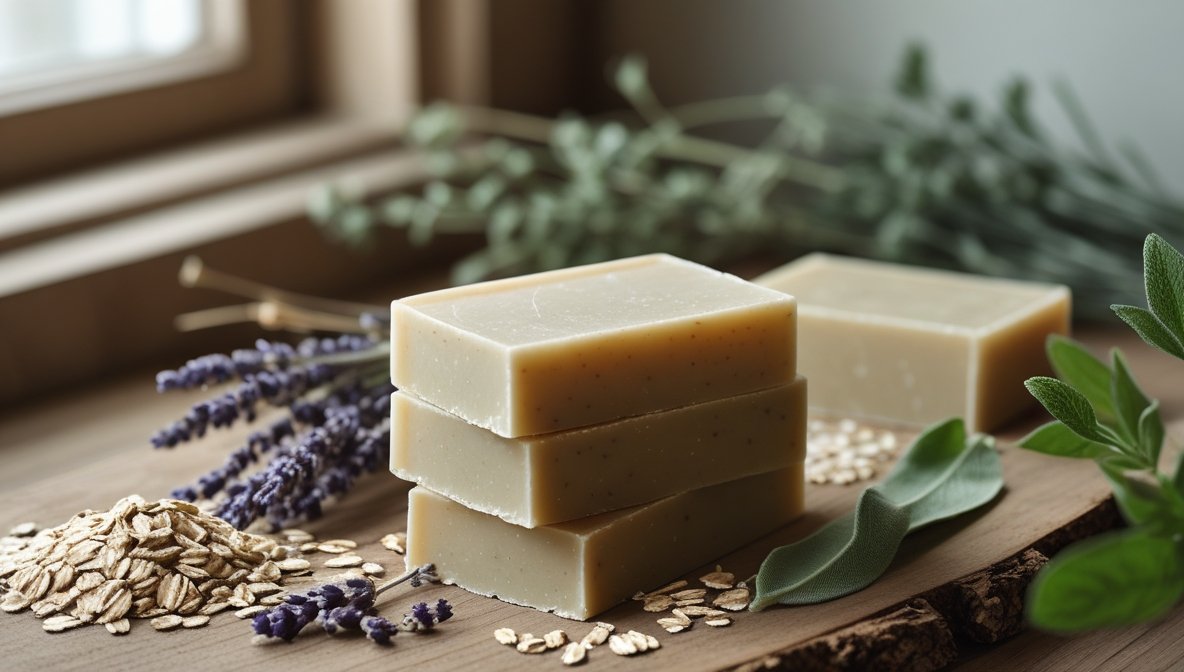
For dry or sensitive skin: Shea butter, oat milk, or calendula-infused bars are your friends. They cleanse gently while adding moisture.
For combination skin: Olive oil and coconut oil balanced formulas work beautifully. They’re effective cleansers that don’t tip the scales toward too dry or too oily.
Step 2: Master the Storage
This is where most people mess up. If your soap sits in a puddle of water, it’s going to dissolve faster than ice cream in July. Invest in a proper draining soap dish—bamboo, ceramic with ridges, or a wire rack all work great.
Keep it away from direct water streams in the shower. A simple wall-mounted dish or a corner shelf does the trick. When your soap dries completely between uses, one bar can last 6-8 weeks of daily use. That’s seriously impressive longevity.
Step 3: Application Techniques
There’s no wrong way to use bar soap, but there are more efficient ways:
Direct application: Wet your skin, rub the bar directly on your body. Simple, effective, no tools needed.
Lather method: Create foam in your hands first, then apply. Good for facial cleansing or sensitive areas.
Washcloth technique: Lather the soap on a cloth for gentle exfoliation. Great for texture-loving folks.
The learning curve is about five seconds. I promise you’ll wonder why you ever thought this was complicated.
The Glycerin Secret
Here’s something that blew my mind when I learned it: quality bar soaps naturally contain glycerin—a moisture-locking humectant that’s basically gold for your skin. But commercial manufacturers often remove the glycerin from liquid soaps to sell it separately in expensive moisturizers.
Wait, what?
Yeah. They take out the good stuff, dilute what’s left with water, add synthetic preservatives, bottle it in plastic, and charge you more. Then they sell you the glycerin they removed as a separate “hydrating serum.” It’s like buying a car and then having to purchase the steering wheel separately.
Glycerin is a humectant, which means it attracts and holds moisture. It pulls water from the environment (or from deeper layers of your skin) to keep your skin surface hydrated and supple. According to dermatological research, glycerin-rich soaps are particularly beneficial for people with eczema, psoriasis, or just chronically dry skin.
Quality solid soaps—especially those made using traditional cold-process methods—retain all their natural glycerin. Every bar you use is delivering that moisturizing benefit without the need for extra products or complicated routines.
Brands like Oryvane use cold-process manufacturing specifically to preserve this natural glycerin content. Their handcrafted bars maintain the full spectrum of skin-loving properties that commercial hot-process manufacturing would strip away. It’s the difference between eating fresh vegetables and taking a vitamin pill—both might have nutrients, but one delivers them in a more bioavailable, synergistic form.
Oryvane’s Approach to Sustainable Luxury
Let’s be real: sustainable shouldn’t mean sacrificing quality. And luxury shouldn’t come with a side of planetary destruction.
Oryvane gets this balance right in a way that’s honestly refreshing. Every bar is handcrafted using 100% natural ingredients—plant-based oils, essential oils, botanical extracts—with vegan formulations and plastic-free packaging. But what I really appreciate is the transparency.
Their cold-process method preserves the natural glycerin (as we talked about), but it also maintains the integrity of ingredients like shea butter, coconut oil, and olive oil. These aren’t heated to the point of breaking down their beneficial properties. The result? Soap that actually nourishes skin instead of just stripping it clean.
The Packaging Philosophy
Each bar comes in compostable paper wraps printed with soy-based inks. No plastic film. No unnecessary outer boxes. No “luxury” packaging that’s really just waste dressed up fancy. The minimalism isn’t a sacrifice—it’s intentional design that lets the product quality speak for itself.
And here’s what sealed the deal for me: Oryvane offers refillable options for their complementary products (body butters, oils) in glass jars designed for infinite reuse. They’ve built in-store refill programs into their business model. It’s a complete ecosystem approach rather than just greenwashing one product line while keeping everything else business-as-usual.
Busting the Biggest Myths
Let’s address the concerns you might still have, because I had them too.
Myth 1: “Bar soap is drying”
Reality: Cheap bar soap with harsh sulfates is drying. Quality bar soap with natural oils and retained glycerin is moisturizing. It’s like saying “cars are slow” because you only drove a golf cart once.
Myth 2: “Bar soap harbors bacteria”
Reality: Multiple studies confirm that bacteria doesn’t transfer from bar soap to skin during normal use. The surfactant action removes microbes rather than depositing them. As long as you rinse the bar before and after use, you’re golden. And remember—liquid soap is actually more prone to bacterial contamination according to dermatologists.
Myth 3: “It doesn’t work as body wash”
Reality: Modern solid soaps create rich, creamy lather and rinse cleanly without residue. The formulations have evolved light-years beyond your grandma’s Ivory soap (though honestly, that worked fine too).
Myth 4: “It’s inconvenient for travel”
Reality: Solid soap is TSA-friendly (no liquid restrictions), compact, spill-proof, and lighter to carry. I’ve traveled with bar soap through 15 countries and had zero issues. It’s actually more convenient than liquids.
Myth 5: “Limited scents and varieties”
Reality: Artisan brands offer everything from unscented sensitive formulas to exotic essential oil blends. Lavender, eucalyptus, citrus, rose, vanilla, charcoal, clay—the variety is actually overwhelming in the best way possible.
Building Your Complete Zero Waste Beauty Routine
Once you’ve nailed the soap switch, you’ll probably start eyeing other bathroom products with fresh skepticism. Good. Here’s how to build out a truly sustainable zero waste beauty routine.
Morning Essentials
- Cleanse: Solid face soap (gentler formula than body soap)
- Tone: Apple cider vinegar in a reusable glass spray bottle
- Moisturize: Face oil in a dropper bottle (refillable)
- Protect: Mineral sunscreen in aluminum tube
Evening Wind-Down
- Remove makeup: Reusable cotton pads + oil cleanser
- Cleanse: Solid body soap (try Oryvane’s evening lavender formula if you want something calming)
- Exfoliate: Dry brushing 2-3x weekly (one-time bamboo brush purchase)
- Hydrate: Body butter from a glass jar
Weekly Treatments
- Clay masks: Buy the powder, mix with water as needed (zero packaging waste)
- Hair masks: Solid hair treatment bars
- Bath soaks: Bulk salts stored in reusable containers
The beauty of this approach is that you’re not just reducing waste—you’re also simplifying. Fewer products, better quality, more intentional choices. My bathroom went from cluttered chaos to zen minimalism, and honestly, it makes the whole routine feel more luxurious, not less.
Frequently Asked Questions
How long does a solid soap bar actually last?
One standard 100g bar lasts approximately 6-8 weeks with daily use—equivalent to 2-3 bottles (250ml each) of liquid soap. The key is proper storage: use a draining dish and let it dry completely between uses. I’ve had bars last even longer when stored correctly. This makes solid soap significantly more economical, plus you’re not running out to buy replacements every few weeks.
Is solid soap really better for sensitive skin?
Absolutely. Premium solid soaps like Oryvane’s sensitive skin range use minimal ingredients—typically just 4-5 natural components—eliminating common irritants like synthetic fragrances, sulfates, parabens, and artificial preservatives. Dr. Deanne Mraz specifically recommends bar soaps with colloidal oats for eczema-prone skin, noting that the simpler formulation reduces the risk of allergic reactions. Always patch test any new product, but natural bar soaps are generally gentler than their liquid counterparts.
What about traveling with solid soap?
Solid soap is actually ideal for travel. It’s TSA-friendly (no liquid restrictions), won’t spill in your luggage, weighs less than bottles, and takes up minimal space. Use a breathable soap tin or travel case with ventilation holes. Let your soap dry completely before closing the case. Silicone travel cases with drainage grooves work brilliantly. I’ve backpacked through Southeast Asia with just bar soap and never had an issue—can’t say the same about the time my shampoo bottle exploded all over my clothes.
Can multiple people use the same bar of soap hygienically?
Yes. Research consistently shows that soap’s surfactant properties prevent bacterial colonization. Each person’s application creates fresh lather that cleanses effectively. The key: rinse the bar before and after use, and store it on a draining dish where it can dry between uses. Dermatologists confirm there’s no increased infection risk with shared bar soap compared to shared liquid soap pumps (which, by the way, are actually breeding grounds for bacteria if not cleaned regularly).
Why is Oryvane’s soap different from drugstore brands?
Oryvane uses cold-process manufacturing that preserves natural glycerin—the moisture-locking humectant that commercial brands often remove to sell separately. They source organic ingredients, use vegan formulations, and package in compostable materials. Commercial brands typically use hot-process methods that speed production but degrade ingredient quality, then add synthetic hardeners and preservatives. The difference shows up in how your skin feels: drugstore soap can strip and dry, while quality handcrafted soap cleanses while maintaining your skin’s moisture barrier.
Does switching to solid soap actually make a difference environmentally?
The numbers say yes—and they’re significant. If just 1% of liquid soap users switched to solid, we’d eliminate approximately 550 million plastic bottles annually from the waste stream. On an individual level, switching from liquid to solid soap for one year prevents about 11 plastic bottles from entering landfills or oceans. Multiply that by your household, then your neighborhood, and the impact compounds quickly. Plus, solid soap’s lower carbon footprint (25% less per wash) and reduced water usage (30% less) make it one of the easiest, most effective sustainability swaps you can make.
Conclusion
Here’s what it comes down to: sustainable beauty isn’t about deprivation or sacrifice. It’s about making smarter choices that benefit your skin, your budget, and the planet all at once.
The shift to solid soap addresses a massive environmental crisis—120 billion units of plastic packaging annually—while delivering superior skincare benefits. With brands like Oryvane leading the charge in natural formulations and sustainable practices, making the switch has never been easier or more rewarding.
Every bar you choose over a plastic bottle is a vote for the kind of beauty industry we want to see: transparent, sustainable, effective, and genuinely luxurious. As we move through 2025, zero waste beauty is transitioning from alternative to standard, driven by conscious consumers who refuse to compromise on quality or values.
The plastic bottle in your shower right now will outlive you by centuries. The solid soap bar? It’ll transform your routine, nourish your skin, and disappear without a trace—except for the positive impact it makes while you use it.
Start your sustainable beauty journey today. Your skin—and the planet—will thank you.
