How to Layer Fragrances: The Art of Building a Unique Signature Scent
Layering fragrances means applying 2-3 scents in sequence — heaviest first — to create a unique combination no bottle can replicate. Here's exactly how to
Layering fragrances means applying two or three scents in a deliberate sequence — always heaviest first — so they blend on your skin into something no single bottle can replicate. The process takes under five minutes, costs nothing extra if you already own multiple perfumes, and produces a personal scent profile that is genuinely unique to you. Start with a rich base like oud or sandalwood, then finish with something lighter and brighter on top.
Most people own several fragrances and wear them one at a time, rotating by mood. That works. But it leaves an enormous creative opportunity untouched. When you understand how fragrance notes interact — and why the order of application matters — you stop choosing between scents and start composing with them. The result is a fragrance wardrobe that feels intentional rather than accidental.
This fragrance layering guide walks through every step in plain terms: how to pick compatible scents, what order to apply them, how to use body care products to dramatically extend longevity, and which combinations consistently work. Whether you're building your first layered scent or trying to get more from a collection you already own, here's how to do it right.
Contents
- Understand Fragrance Notes Before You Layer
- Step 1: Build Your Scented Base With Body Care
- Step 2: Choose Your Anchor Fragrance
- Step 3: Select a Complementary Top Fragrance
- Step 4: Apply in the Right Order and on the Right Spots
- Step 5: Balance the Ratio and Edit Down
- Perfume Combinations That Actually Work
- Fragrance Layering Combinations at a Glance
- Watch This First
- What Real People Are Saying
- Frequently Asked Questions
- Your Next Steps
Understand Fragrance Notes Before You Layer
Fragrance operates in three layers — top notes, middle (heart) notes, and base notes. Top notes are what you smell in the first few minutes: citrus, green herbs, light florals. They evaporate fastest. Middle notes emerge after about 20 minutes and carry the character of the scent — rose, jasmine, spice. Base notes anchor everything and linger for hours: musk, sandalwood, amber, vanilla, oud.
When you layer two fragrances, you're essentially combining their note structures into a single composition. This is why the order of application matters. If you spray a heavy oriental fragrance over a light citrus scent, the oriental will overwhelm and bury the citrus entirely. Reversed — citrus on top of the oriental — and you get the brightness upfront with the warmth developing underneath. That contrast is what makes a layered scent feel complex and intentional rather than just muddled.
The most reliable pairings share at least one note family in common. A well-layered combination balances fragrance notes by avoiding stacking too many dominant top notes together — which creates a sharp, discordant opening — and instead letting base-heavy fragrances do the heavy lifting while lighter scents provide nuance. Think of it like seasoning food: a great dish uses depth from below and brightness from above, not two equally aggressive flavors competing for attention.
Linear fragrances — ones that smell nearly identical from first spray to dry-down — are the easiest to layer. They're predictable. You know exactly what you're working with two hours in, which makes it far simpler to calculate how they'll interact with a second scent. Complex, evolving fragrances can layer beautifully, but they require more experimentation because what smells great in the opening might clash badly once the heart notes emerge.
Step 1: Build Your Scented Base With Body Care
The single biggest reason fragrances fade quickly has nothing to do with the quality of the perfume. It's dry skin. Fragrance molecules bind to moisture and oil — without them, a scent has nothing to grip and evaporates within an hour. Moisturized skin can extend a fragrance's longevity dramatically, which is why layering body care products is the foundation of any serious scent-layering approach.
Start with a body lotion, cream, or oil applied right after your shower while your skin is still slightly warm and pores are open. If you can find a scented lotion that complements your intended fragrance — say, a vanilla body cream under a gourmand perfume, or an unscented oil under something delicate and floral — even better. The goal at this stage is hydration and a grippy surface for your fragrances to adhere to. According to the Musings of a Curvy Lady YouTube channel, building a scented base using a serum, lotion, and oil in sequence — what she calls the "SLO method" — creates layered hydration that gives fragrance something to hold onto all day long. The principle is sound: you're essentially priming your skin the same way a primer extends makeup wear.
If you want to introduce a scent dimension at this stage, reach for a lightly scented body serum or a scented body butter in a complementary note family. A guava or tropical fruit body butter under a fruity floral perfume amplifies the top notes of that perfume and creates a richer, more multidimensional dry-down. Similarly, a musky or sandalwood body oil under a woody fragrance makes the base notes feel warmer and more enveloping. The body care layer isn't decorative — it's structural.
One practical note: if you're using a strongly scented body lotion, make sure it doesn't actively compete with your perfumes. A heavily synthetic floral lotion under a clean aquatic fragrance can produce something genuinely unpleasant. When in doubt, use an unscented or lightly scented moisturizer and let your fragrances do the creative work. The body care step is about longevity and skin condition, not about adding complexity for its own sake.
Step 2: Choose Your Anchor Fragrance
Your anchor fragrance is the foundation scent — the one that will define the character of the blend and linger longest on your skin. This should always be your heavier, more complex, or more base-note-dominant scent. Think orientals, woods, musks, ambers, gourmands. These fragrances typically have strong dry-down phases and high staying power, which means they'll still be present hours after application when lighter scents have long since faded.
Good anchor candidates include an oud-based eau de parfum, a rich vanilla or amber, a deep rose EDP, or a sandalwood-forward fragrance. In terms of concentration, eau de parfum and parfum work better as anchors than eau de toilette simply because their higher fragrance oil content means they project and persist more effectively.
According to fragrance layering principles from Layermor, starting with a foundational "base scent" product ensures you're building a coherent fragrance profile from the ground up rather than randomly stacking scents and hoping for the best. That intentionality is what separates a genuinely unique signature scent from just smelling like you got confused at the perfume counter.
When evaluating your anchor, ask: what is this fragrance's dominant personality? If it's primarily a woody scent, your top layer should bring freshness or florals. If it's a heavy sweet oriental, consider a green or ozonic fragrance on top to cut through the sweetness. The anchor defines the direction; your top scent provides contrast or amplification. You need to know the anchor's personality before you can make a smart choice for what goes above it.
Keep the anchor application slightly restrained. One or two sprays on pulse points — inner wrists, the base of the throat — is sufficient at this stage. You want to leave room for the top fragrance to register rather than immediately overpowering everything.
Step 3: Select a Complementary Top Fragrance
The top fragrance is what you smell first when someone enters your orbit. It's lighter, typically faster-evaporating, and its job is to either contrast beautifully with your anchor or to amplify certain qualities within it. Common choices include fresh citrus EDTs, light florals, clean aquatics, or sheer musk sprays.
The best approach is to find a top scent that shares at least one note with your anchor. If your anchor is a rose and oud perfume, a light rose eau de toilette on top will intensify the floral aspect while the oud operates underneath. If your anchor is a dark vanilla, a bourbon or tonka bean body mist on top deepens the gourmand quality. Sharing a note creates continuity. Contrasting notes — say, a bright bergamot EDT over a smoky wood EDP — create complexity and dimension.
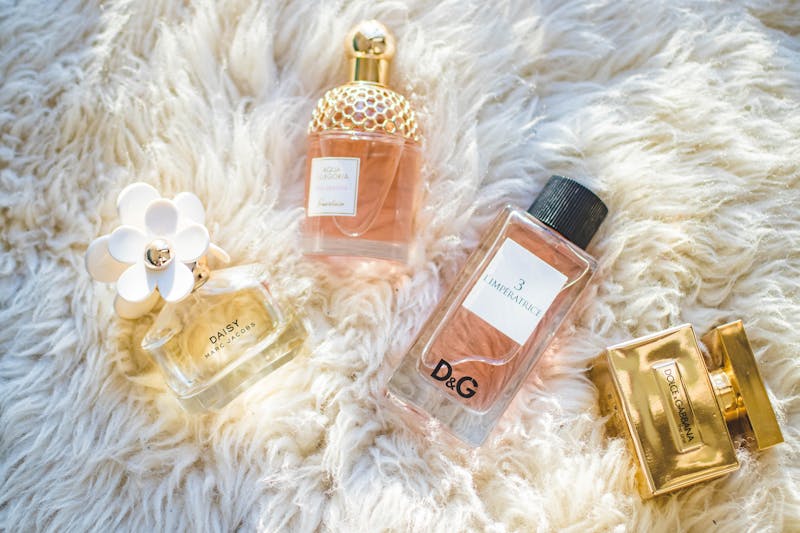
Scents that work well as top layers tend to be what r/fragrance community members describe as "one-dimensional" or linear — meaning they don't evolve much and won't suddenly clash with your anchor two hours in. A Marc Jacobs Daisy EDT layered over a deeper scent is a popular real-world example because Daisy is consistent and bright from first spray to final dry-down.
Body sprays and eau de cologne concentrations are useful here precisely because of their lighter weight. They sit above your anchor without suffocating it. A body mist layered over an EDP isn't a combination of equals — the EDP anchors the blend while the body mist provides a top note accent. That's a legitimate and very effective technique, especially for building a scent that evolves gracefully through the day as the lighter top layer fades.
Step 4: Apply in the Right Order and on the Right Spots
Order matters more than most people realize. Always apply the heavier, denser fragrance first and the lighter scent on top. The reason is purely physical: heavier fragrance molecules need direct skin contact to warm up and project properly. If you spray a light citrus mist first and then an oud EDP on top, the oud will literally sit on top of the lighter scent, crushing it. Reversed, the citrus floats above the oud exactly as intended.
Give your anchor fragrance 30 to 60 seconds to settle and begin its initial evaporation phase before applying your top scent. This brief window allows the anchor's top notes to dissipate slightly and its character to establish before you introduce the second layer. Some people wait a full two to three minutes, which gives even more separation and definition to each layer.
Pulse points are the standard application sites because the warmth of blood vessels close to the skin surface helps diffuse fragrance molecules into the air. The inner wrists, inner elbows, base of the throat, and behind the ears are all effective. For a layered scent, some experienced enthusiasts use a split-application technique: one fragrance on the wrists and one on the neck. This creates a slightly different olfactory experience depending on proximity — someone standing close to you might catch one scent more prominently than another.
Never rub your wrists together after spraying. This is repeated advice for good reason — rubbing physically crushes the fragrance molecules and accelerates evaporation of the top notes, which destroys the delicate top layer of a layered blend before it has a chance to develop. Spray and let it rest. The warmth of your skin does all the work.
Avoid spraying into the air and walking through the mist. That technique wastes fragrance and produces a far weaker result than direct application to skin. For scented hair, which can carry fragrance remarkably well and project it over time, hold the bottle at least 8 to 10 inches away and spray lightly — most perfumes contain alcohol that can dry out hair with repeated direct contact.
| Anchor (Apply First) | Top Layer (Apply Second) | Result Profile | Best Season |
|---|---|---|---|
| Amber or Vanilla EDP | Bergamot or Citrus EDT | Warm-fresh, energetic | Spring / Fall |
| Rose or Peony EDP | White musk or green EDT | Floral-fresh, feminine | Spring / Summer |
| Sandalwood EDP | Aquatic or ozonic EDT | Clean-creamy, modern | Year-round |
| Oud or leather EDP | Rose or saffron EDP (light application) | Rich, complex, statement | Fall / Winter |
| Vanilla or caramel EDP | Clean laundry musk spray | Skin-scent, intimate | Fall / Winter |
Step 5: Balance the Ratio and Edit Down
The most common mistake beginners make with fragrance layering is using too much of everything. Two complete applications of two different fragrances is often double what you actually need. The goal isn't volume — it's balance and coherence.
A ratio that works consistently: approximately 40% anchor to 60% top scent in terms of application intensity. In practice, this usually means two sprays of your anchor EDP and three to four sprays of a lighter top scent — or, more commonly, two sprays of the EDP and one to two sprays of a lighter body mist. The anchor provides depth; the top scent provides brightness. You want the combination to read as one unified scent rather than two competing fragrances fighting for attention.
The r/FragranceStories community regularly discusses this ratio — many experienced users describe applying the heavier base fragrance first with two sprays and then finishing with a lighter fragrance using three, keeping the overall impression balanced rather than overwhelmed by either one. That real-world confirmation of the 40/60 split is worth taking seriously.
Edit as you go. After your first attempt at a layered combination, smell your wrist after 20 minutes — not immediately, which only tells you about top notes, but after the blend has had time to settle. If one scent is completely absent, add slightly more. If the combination is genuinely clashing — if you're getting something harsh, soapy, or chemical — it's a compatibility issue, not a ratio issue. Swap one of the fragrances rather than adjusting quantities.
Less is always more. A subtle, well-balanced layered scent that makes someone lean in is far more effective than an aggressive cloud of competing fragrances that announces your arrival from across the room. When in doubt, apply less and reassess after the 20-minute dry-down.
Perfume Combinations That Actually Work

Knowing the theory is one thing. Having a starting point is another. Here are proven perfume combination frameworks that consistently produce coherent, wearable results.
Floral over woody: A rose or peony EDP as the anchor, finished with a sheer white musk or fresh-cut green EDT on top. The floral provides femininity and depth; the green or musk adds freshness and longevity. Works particularly well in spring and early summer.
Citrus over amber: A warm amber or vanilla EDP layered under a bright bergamot or mandarin EDT. The citrus top note gives an energetic opening that slowly gives way to the warm amber dry-down. Excellent for transitional weather — not quite a summer scent, not quite a winter scent, but something compelling in between.
Oud over oud: Two oud-based fragrances from different houses can work beautifully if they lean in different directions — one more smoky-leathery, one more rose-oud. The combination creates a richer, more complex oud experience than either fragrance alone. This is an advanced combination that requires patience and testing.
Gourmand plus musk: A sweet vanilla or caramel EDP under a clean laundry-style musk spray. The musk lifts the sweetness and prevents the gourmand from feeling cloying, while the vanilla adds warmth and intimacy to what might otherwise be a flat musk. A genuinely skin-like, enveloping combination that generates compliments.
Aquatic over sandalwood: A clean ocean or ozonic EDT layered over a creamy sandalwood EDP. The sandalwood provides richness and skin-feel; the aquatic gives a clean, modern freshness on top. Popular in men's and unisex fragrance layering, though genuinely gender-neutral in effect.
According to EOS's fragrance layering guide, building from neutral to bold — starting with soft, skin-like scents like musk or sandalwood before adding brighter notes on top — consistently produces the most elegant layered results. That principle underlies most of the combinations above.
Fragrance Layering Combinations at a Glance
Watch This First
The Musings of a Curvy Lady YouTube channel covers the SLO method — serum, lotion, oil — as a systematic way to prime your skin before applying any fragrance. The core insight is that most people who complain about fragrance not lasting haven't built a proper moisture base first. The channel demonstrates this by working within a single scent family across all three product layers — fruity notes in the serum, lotion, and body butter — creating a cohesive background that amplifies and extends whatever fragrance goes on top.
What makes this video practically useful is the emphasis on choosing scented body products that stay within your intended note family rather than fighting against it. A vanilla body butter under a vanilla-heavy perfume doesn't just extend longevity — it enriches the entire dry-down phase, making the final scent feel richer and more layered than the perfume alone could achieve. That's the real value of the body care step, and it's an insight that gets skipped in most written fragrance layering guides.
What Real People Are Saying
The fragrance community on Reddit has spent years crowd-testing layering combinations, and several consistent insights emerge from the discussions. In r/fragrance, users consistently emphasize that linear fragrances — ones that don't significantly change over time — are far easier to layer successfully than complex, evolving compositions. The reasoning is simple: if a fragrance transforms dramatically from opening to dry-down, you can't reliably predict how it will interact with a second scent two hours in.
In r/FemFragLab, members describe a split-application technique that's worth trying: spray one fragrance on the left wrist and inner right elbow, then the second fragrance on the right wrist and left side of the neck. This creates a subtle asymmetry in the scent field where the two fragrances mix more in the air between you and another person than they do on the skin directly. Several users report this technique produces a more natural, less "applied" quality to the overall effect.
And in r/DesiFragranceAddicts, the community consensus is that starting with two linear scents that complement each other is the most reliable path for beginners — before moving on to layering complex fragrances that can produce unexpected results. The patience and experimentation aspect comes up repeatedly: there's no formula that works for every skin chemistry, and the only way to find your combinations is to test and adjust.
Frequently Asked Questions
How many fragrances can you realistically layer at once without creating a mess?
Two fragrances is the sweet spot for most people. Three can work if all three share a note family and you're deliberate about concentrations, but the margin for error shrinks considerably. More than three is almost always counterproductive — the individual scents stop being identifiable and the blend turns into an undifferentiated mass. Start with two, master the ratio, then experiment with a third if you want more complexity.
Does layering fragrances make them last longer on skin?
Yes, particularly when you layer on a moisturized base. The body care products underneath help fragrances adhere, and using a heavy base-note EDP as your anchor means the deepest layer of the composition persists long after lighter top notes have faded. The result is a scent that evolves throughout the day rather than disappearing — which feels like longer wear even if the total projection fades over time.
What is the 3-1-1 rule for perfume when flying?
The TSA's 3-1-1 rule applies to all liquids carried onto a plane, including perfume: bottles must be 3.4 ounces (100 ml) or smaller and placed in a single clear quart-sized bag alongside other liquids. Bottles larger than 3.4 oz must go in checked luggage. Decants and travel atomizers are useful for traveling with multiple fragrances without exceeding the limit.
Can people with psoriasis or eczema safely layer fragrances?
With caution. People with psoriasis, eczema, or any condition that compromises the skin barrier lack the first line of defense against potential irritants, which means fragrance ingredients — particularly synthetic musks and certain aldehydes — can penetrate more readily and trigger reactions. If you have a compromised skin barrier, avoid applying fragrance directly to affected areas, focus on hair and clothing as alternative application points, and consult a dermatologist before experimenting with new products.
Is it better to layer fragrances on skin or on clothing?
Skin gives you the most complex, evolving result because body heat activates the fragrance throughout the day. Clothing holds scent longer — some fabrics can retain fragrance for days — but the scent doesn't develop or change the way it does on skin. For layering specifically, skin application is preferable because the warmth allows the individual layers to interact and merge rather than just sitting on top of each other. Spraying each layer on a different fabric surface would keep them separate, which defeats the purpose.
How do you know if two fragrances are compatible before committing to a full application?
Spray each fragrance on a separate paper blotter, then hold them together and let them sit for five minutes. The initial impression is informative, but the dry-down is what matters — check again at 10 and 20 minutes. If the combination still smells coherent and appealing at the 20-minute mark, it will likely work on skin. Alternatively, spray one fragrance on each wrist and smell the space between your wrists without touching them together. This gives you a rough preview of how they'll interact in proximity.
What's the best way to start building a fragrance wardrobe for layering?
Start with one strong anchor and two to three potential top fragrances rather than buying everything at once. Choose an anchor in a note family you reliably love — woody, oriental, or floral. Then explore lighter, complementary options that share one note with your anchor. Decants are invaluable here: many online fragrance retailers sell sample sizes for $5 to $15, letting you test combinations before committing to full bottles. Building a fragrance wardrobe deliberately over time produces far better results than impulse-buying full bottles without a layering strategy.
Your Next Steps
Fragrance layering isn't complicated — but it does reward deliberate practice over guesswork. Here's where to focus your first attempts:
- Moisturize first, always. Apply a scented or unscented lotion or body oil before any fragrance. This single habit extends wear time more than any other change you can make, and it costs nothing if you already own moisturizer.
- Start with two linear fragrances that share a note. Don't begin by layering two complex, evolving scents. Pick one heavy anchor and one light, simple top scent in a compatible note family, apply in the right order, and evaluate the dry-down at 20 minutes. Adjust ratio before swapping fragrances.
- Document what works. Keep a simple note — even a phone note — of combinations that succeed. Write down the anchor, the top scent, the ratio, and your skin's reaction at the 20-minute mark. After a few weeks, patterns will emerge that reveal your actual scent preferences with far more precision than shopping by bottle alone ever could.
About the Author
Written by Zara Voss
Zara Voss is a beauty editor and makeup artist who has tested hundreds of products across luxury and drugstore ranges. She covers cosmetics, hair care, and fragrance with a focus on real-world wearability and value. Based in Los Angeles, she writes for beauty enthusiasts who want honest, unsponsored reviews.
Disclaimer: This article is for informational purposes only. Shade availability, product formulas, and pricing may vary by retailer. Always check current listings before purchasing.
Last updated: May 11, 2026 · glowi.today